

.png)
Respiratory Protective Equipment (RPE) fit testing plays an important role in the health and safety framework of Formula 1, even though it is not something visible on race day. While drivers are not typically required to wear respirators in the cockpit, engineers, mechanics, and factory personnel frequently rely on RPE in controlled environments where airborne contaminants may be present.
Fit testing ensures that respiratory protection performs as intended. Even the most advanced respirator is only effective if it forms a secure seal against the wearer’s face. Without a proper fit, hazardous particles or vapours can bypass the filter through small gaps around the mask, significantly reducing its level of protection.
Workplace Risks Behind the Paddock
F1 teams operate in highly advanced engineering environments where a range of airborne hazards can be present, depending on the task being carried out.
Across design, manufacturing, and trackside operations, staff may encounter fine carbon fibre and composite dust generated during cutting, sanding, trimming, and repair work. These particles can become airborne easily and may cause respiratory irritation if not adequately controlled.
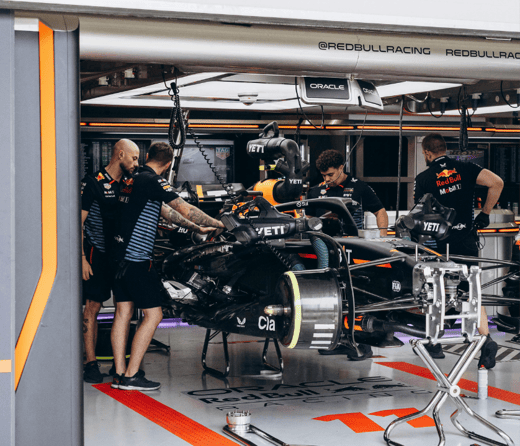
Resin systems used in carbon fibre bonding and structural assembly can also release vapours and aerosols during mixing, application, and curing. Epoxy resins and associated hardeners may produce sensitising fumes, while solvent-based cleaning and preparation processes introduce exposure to volatile organic compounds (VOCs) such as acetone and isopropyl alcohol.
Mechanical processes such as CNC (Computer Numerical Control) machining, grinding, and polishing of aluminium, titanium, and steel components can generate fine metallic dust, which becomes respirable when released during high-speed or dry finishing operations.
At trackside, braking systems produce ultra-fine carbon composite and metallic particulates during high-energy braking events. Brake dust is particularly prevalent in pit lane and garage environments during practice and race sessions, where maintenance activity can also re-suspend settled particles into the air.
Fuel handling and vehicle preparation introduce additional hydrocarbon vapours, while paints, coatings, and aerosol applications used in bodywork finishing can generate overspray and, in some cases, exposure to respiratory sensitisers such as isocyanates.
Although these risks are carefully managed through engineering controls such as ventilation systems, local extraction, containment procedures, and process design, the fast-paced nature of Formula 1 means that short-duration, high-intensity tasks can still present residual airborne exposure. In these situations, respiratory protective equipment provides a critical final line of defence.
The Value of Fit Testing
Fit testing is a structured process used to confirm that a specific respirator model is suitable for an individual wearer. Because facial shapes and sizes vary significantly, a mask that performs well on one person may not provide an adequate seal on another.
The process evaluates two key factors: whether the respirator achieves an effective seal to the face, and whether that seal remains stable during typical movements such as speaking, bending, or turning the head. Even minor leaks can allow contaminants to bypass the filter, undermining the effectiveness of the equipment.
By verifying fit in controlled conditions, organisations can ensure that RPE provides consistent and reliable protection in real-world use.
Shawcity Supporting Formula 1 Teams
Shawcity has been a long-standing health and safety supplier to several Formula 1 teams based in the UK, particularly in Oxfordshire, one of the world's leading motorsport engineering hubs and home to many organisations located close to Silverstone.
For many years, Shawcity has supplied portable and fixed gas detection systems to support occupational safety across motorsport manufacturing and testing facilities. Building on this expertise, Shawcity now offers advanced quantitative respirator fit testing solutions to help teams meet their respiratory protection obligations.
As the UK and Ireland's exclusive distributor for OHD, Shawcity is pleased to be working closely with a Formula 1 team to support its fit testing programme, ensuring personnel receive reliable and objective respirator fit assessments.
Advanced Quantitative Fit Testing Solutions
Shawcity supplies two complementary quantitative fit testing technologies from OHD: AeroFit and QuantiFit2, providing Formula 1 organisations with flexible solutions for different respirator types and testing requirements.
AeroFit 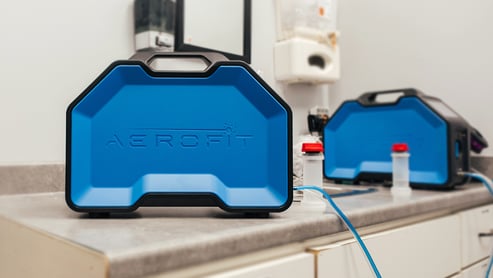
The AeroFit uses Ambient Particle Counting (APC) technology to measure
microscopic ambient particles inside and outside a respirator to calculate an accurate fit factor. Designed for both disposable respirators (including FFP2 and FFP3 masks) and reusable elastomeric respirators, AeroFit offers a quiet operating platform, automated daily verification and intelligent particle management to streamline testing while delivering highly repeatable quantitative results.
For Formula 1 teams conducting routine testing across manufacturing departments, composite workshops and machine shops, AeroFit provides a fast and efficient solution capable of supporting high-volume testing programmes.
QuantiFit2 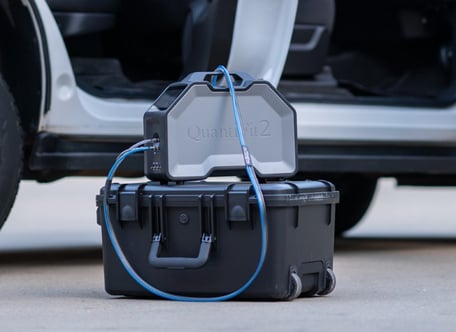
The QuantiFit2 utilises OHD's patented Controlled Negative Pressure (CNP)
technology, directly measuring respirator leakage rather than relying on ambient particles. Using only air as the challenge agent, it requires no alcohol, particle generators or consumables, allowing testing to be carried out indoors, outdoors or in clean and dirty environments. Fit tests can typically be completed in around two minutes, making it one of the fastest quantitative fit testing systems available.
Battery-powered operation, touchless AutoStart functionality and wireless connectivity make QuantiFit2 particularly suited to busy engineering facilities where portability and operational flexibility are important.
APC and CNP Technologies in Formula 1
Both Ambient Particle Counting (APC) and Controlled Negative Pressure (CNP) technologies offer valuable benefits within the Formula 1 industry.
Particle-counting systems such as AeroFit are ideal for organisations carrying out frequent testing across large workforces, particularly where disposable respirators are widely used. Their speed and ability to test multiple respirator types make them well suited to the fast-paced nature of motorsport manufacturing.
CNP technology, delivered through QuantiFit2, offers direct leak measurement with exceptional precision and consistency. Because it uses only air rather than external challenge agents, it provides testing flexibility in a wide range of environments while eliminating ongoing consumable costs.
Together, these complementary technologies allow Formula 1 teams to select the most appropriate quantitative fit testing method for different departments, respirator types and operational requirements, ensuring workers receive the highest possible level of respiratory protection.
Book your demonstration with Shawcity
Discover how OHD’s advanced fit testing technology can enhance your respiratory protection programme.
Contact Shawcity to request a demonstration and to explore AeroFit trade-in offers.
01367 899419
solutions@shawcity.co.uk


%20(1280%20x%20720%20px).png)

 01367 899553
 info@shawcity.co.uk