

.png)
Refrigerant leaks are an often-overlooked but significant contributor to climate change. Used in everyday systems such as air conditioners, refrigerators, and industrial cooling equipment, refrigerants are essential to modern life. However, when these gases escape into the atmosphere, they can cause lasting damage to the environment and increase global warming.
What Are Refrigerant Leaks?
Refrigerants are chemical compounds designed to absorb and transfer heat within cooling systems. A refrigerant leak occurs when these gases escape due to poor installation, ageing components, corrosion, or inadequate maintenance. While a single leak may seem minor, widespread leakage across millions of systems creates a substantial environmental impact.
Types of Refrigerants and Their Environmental Risks
Different generations of refrigerants have been developed over time, each with varying environmental consequences:
- Chlorofluorocarbons (CFCs): Phased out globally due to severe ozone depletion
- Hydrochlorofluorocarbons (HCFCs): Less harmful than CFCs but still damaging to the ozone layer
- Hydrofluorocarbons (HFCs): Widely used today; ozone-friendly but extremely potent greenhouse gases
Many HFCs have a global warming potential (GWP) thousands of times higher than carbon dioxide, making even small leaks highly impactful.
Environmental Impact of Refrigerant Leaks
Refrigerant leaks contribute to environmental damage in several critical ways. When released, high-GWP gases trap heat in the atmosphere, accelerating global warming. Older systems may still release ozone-depleting substances, weakening the Earth’s natural protection against harmful UV radiation.
Leaks also reduce system efficiency, forcing equipment to work harder and consume more energy. This leads to higher electricity demand and increased carbon emissions from power generation. Together, these effects create a self-reinforcing cycle: rising temperatures drive greater demand for cooling, resulting in more refrigerant use, more leaks, and further warming.
Common Causes of Refrigerant Leaks
Most refrigerant leaks are preventable and typically result from:
- Poor installation or system design
- Lack of routine maintenance
- Corrosion of pipes and internal components
- Mechanical wear and tear over time
- Improper disposal of outdated equipment
Regulatory Standards and Monitoring Requirements
Refrigerant management is also governed by strict international and European regulations designed to reduce emissions and improve system safety.
A key standard is European Standard EN378-1:2016, which sets requirements for the safety and environmental performance of refrigeration systems and heat pumps. This standard emphasises risk reduction, adequate system design, and leak prevention through monitoring and maintenance practices.
In addition, under EU F-Gas regulations, continuous leak monitoring is mandatory for systems containing fluorinated greenhouse gases (HFCs, HFC/HFO blends, and HFOs) where the charge size is equal to or greater than 500 tonnes of CO₂ equivalent (CO₂e). This requirement is designed to ensure early detection of leaks and to significantly reduce high-impact refrigerant emissions.
These regulations highlight the growing importance of proactive monitoring as a key tool in environmental protection and compliance.
Monitoring Solutions: MSA Bacharach Refrigerant Detection
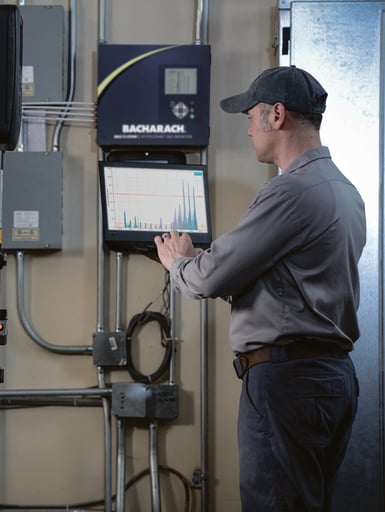
Reducing refrigerant emissions depends heavily on early detection and continuous monitoring. Advanced leak detection technology helps identify issues before they escalate, minimising environmental harm and system inefficiency.
The MSA Bacharach range offers solutions tailored to different applications:
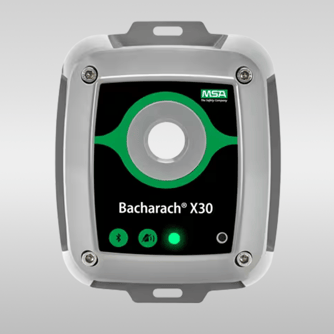
- X30 Refrigerant Monitor: Ideal for commercial HVAC systems, providing continuous
monitoring and integration with building management systems.
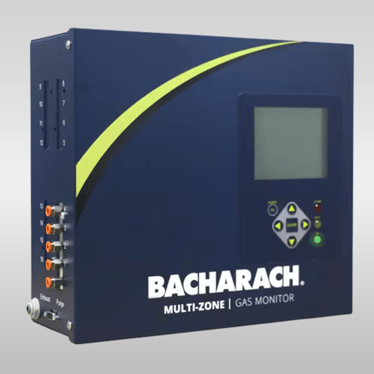
- Multi-Zone Gas Monitor: Designed for large facilities such as supermarkets, capable of detecting ultra-low refrigerant levels across multiple areas.
- PGM-IR Portable Leak Detector: A portable tool for maintenance engineers, enabling fast and precise leak detection during servicing.

These technologies play a crucial role in reducing emissions by detecting leaks early, enabling timely repairs, and supporting ongoing system maintenance.
Advanced Monitoring Solutions from Shawcity
Effective refrigerant leak prevention starts with reliable monitoring. Shawcity provides industry-leading gas detection and refrigerant monitoring solutions designed to help businesses identify leaks early, maintain compliance, and reduce environmental impact.
By combining fixed and portable detection systems, Shawcity enables continuous monitoring across a wide range of environments, from commercial HVAC systems to large industrial facilities. These solutions are engineered to detect even low-level refrigerant leaks, allowing for rapid response before issues escalate into costly repairs or significant emissions.
With advanced connectivity options, many Shawcity monitoring systems integrate seamlessly with building management systems (BMS), providing real-time alerts and data insights. This not only improves safety and efficiency but also supports sustainability goals by minimising refrigerant loss and reducing energy consumption.
Whether for routine maintenance, compliance, or environmental protection, Shawcity’s monitoring solutions play a critical role in helping organisations take a proactive approach to refrigerant management.
For further information, or to discuss your requirements, contact Shawcity today on 01367 899419 or email fixedgas@shawcity.co.uk.
.png)


 01367 899553
 info@shawcity.co.uk