

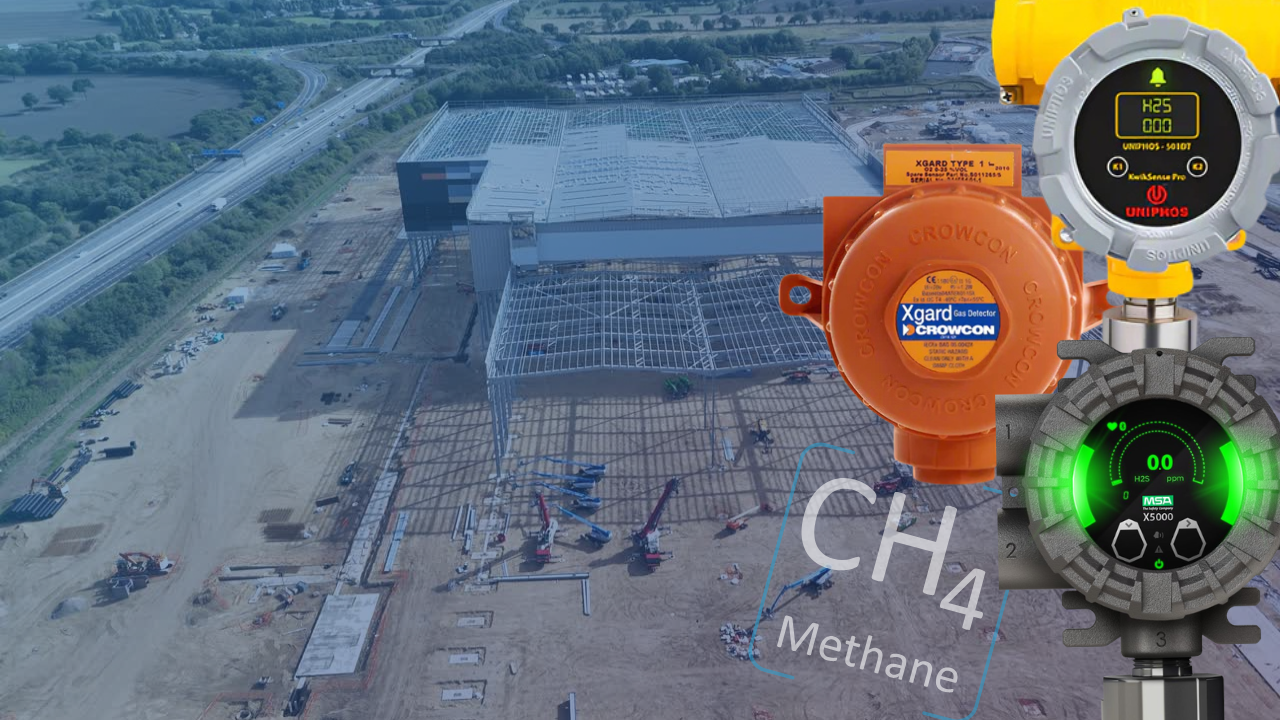
Brownfield land redevelopment plays a crucial role in addressing housing shortages, supporting economic growth, and reducing pressure on undeveloped greenfield sites. Across many countries, former industrial, commercial, waste disposal, mining, and manufacturing sites are routinely transformed into residential, commercial, and mixed-use developments. While these projects can deliver substantial social and economic benefits, they often inherit environmental risks associated with the site's historical use.
One of the most significant long-term risks on many brownfield developments is the generation and migration of methane gas. Methane can originate from a variety of subsurface sources, including historical landfill deposits, buried organic materials, former waste management activities, contaminated soils, and degrading underground structures. Although extensive site investigations and remediation measures are typically undertaken before construction, methane generation can continue for decades after development has been completed.
For this reason, long-term methane monitoring programmes extending up to 30 years after construction should be considered an essential component of brownfield risk management. Furthermore, the installation of fixed methane gas detection systems provides a continuous layer of protection that can safeguard occupants, property, and infrastructure throughout the life of the development.
Understanding Methane Risks on Brownfield Sites
Methane (CH₄) is a colourless, odourless, and highly combustible gas produced through the decomposition of organic matter under anaerobic conditions. On brownfield sites, methane may be generated by:
- Historic landfill waste deposits.
- Buried organic materials.
- Former industrial lagoons.
- Contaminated made ground.
- Degrading timber structures and buried vegetation.
- Legacy waste disposal practices.
- Former sewage treatment facilities.
- Coal mining and hydrocarbon-related activities.
Methane presents two primary hazards:
Explosion Risk
Methane becomes explosive when mixed with air at concentrations between approximately 5% and 15% by volume. If methane accumulates within enclosed spaces such as basements, service ducts, utility chambers, crawl spaces, or underground car parks, a single ignition source can trigger a significant explosion.
Asphyxiation Risk
Although methane itself is not toxic, it can displace oxygen within confined spaces. Reduced oxygen concentrations can create dangerous conditions for maintenance personnel, occupants, and emergency responders.
Because methane is lighter than air, it tends to migrate through soil voids, service trenches, utility corridors, and fractures in the ground. This migration behaviour can make gas pathways difficult to predict over the long term.
Why Methane Risks Persist for Decades
A common misconception is that methane generation ceases shortly after remediation or construction is completed. In reality, methane-producing processes can continue for many decades.
Organic materials buried within the ground may continue decomposing slowly for extended periods. Similarly, landfill-derived gas generation often follows a long decline curve rather than stopping abruptly.
Several factors can influence methane production and migration over time:
- Changes in groundwater levels.
- Variations in rainfall and climate conditions.
- Drought and flooding events.
- Alterations to site drainage systems.
- Construction of neighbouring developments.
- Utility installation and maintenance works.
- Ground settlement and differential movement.
- Degradation of gas protection measures.
A site that exhibits low methane concentrations during construction may experience increased gas generation or altered migration patterns years or even decades later. Consequently, relying solely on pre-construction investigations may not provide sufficient assurance throughout the lifetime of a development.
The Case for 30-Year Methane Monitoring Programmes
Long-term environmental management strategies increasingly recognise that gas-related risks require ongoing assessment rather than one-time verification.
A 30-year methane monitoring programme can provide several important benefits.
Verification of Remediation Performance
Most brownfield developments incorporate gas protection measures such as:
- Gas-resistant membranes.
- Ventilation layers.
- Passive venting systems.
- Active extraction systems.
- Ground improvement measures.
Monitoring allows owners and regulators to verify that these systems continue performing as intended long after construction has finished.
Identification of Emerging Risks
Ground conditions evolve over time. Long-term monitoring can identify trends before they develop into significant hazards.
For example, gradual increases in methane concentrations may indicate:
- New gas generation sources.
- Blocked venting systems.
- Membrane deterioration.
- Changes in groundwater conditions.
- Altered subsurface migration pathways.
Early detection allows corrective actions to be implemented before occupants are exposed to unacceptable risks.
Regulatory and Liability Protection
Property owners, developers, local authorities, and infrastructure operators all have responsibilities relating to public safety.
Maintaining documented methane monitoring records over several decades demonstrates due diligence and provides evidence that risks have been actively managed. This can be particularly important in the event of future property transactions, insurance claims, regulatory reviews, or legal disputes.
Protection of Future Occupants
Buildings frequently undergo changes during their operational life. Extensions, refurbishments, landscaping works, and utility upgrades may unintentionally alter gas migration pathways.
Long-term monitoring ensures that evolving site conditions are understood and that future occupants remain protected regardless of changes made after the original development.
Limitations of Periodic Monitoring Alone
Traditional methane monitoring often relies on periodic inspections and manual gas sampling. While these surveys remain valuable, they have limitations.
Methane concentrations can fluctuate significantly due to:
- Atmospheric pressure changes.
- Seasonal variations.
- Rainfall events.
- Groundwater fluctuations.
- Temperature changes.
As a result, periodic monitoring may fail to capture short-duration gas migration events occurring between inspections.
A site may appear compliant during quarterly or annual monitoring visits while still experiencing intermittent methane accumulations that remain undetected.
This limitation highlights the importance of supplementing traditional monitoring with continuous fixed gas detection systems.
The Importance of Fixed Methane Gas Detection
Fixed methane gas detection systems provide continuous, real-time monitoring of gas concentrations in buildings and critical infrastructure.
Unlike manual surveys, fixed detectors operate 24 hours a day, 365 days a year.
Continuous Protection
Fixed methane detectors continuously sample the atmosphere and provide immediate warning when gas concentrations exceed predetermined thresholds.
This continuous monitoring capability significantly reduces the likelihood that dangerous gas accumulations will go unnoticed.
Early Warning Capability
Modern detection systems can trigger alerts at low methane concentrations, providing operators with sufficient time to investigate and implement corrective actions before hazardous levels are reached.
Typical responses may include:
- Activating ventilation systems.
- Initiating emergency procedures.
- Alerting facilities management teams.
- Shutting down ignition sources.
- Triggering building management system alarms.
Enhanced Safety for Occupants
Residential residents, office workers, retail customers, and maintenance personnel are unlikely to recognise methane hazards without dedicated monitoring systems.
Fixed gas detection provides an automated safety barrier that does not depend upon human observation or intervention.
Integration with Building Management Systems
Many modern methane detectors can be integrated with:
- Building Management Systems (BMS).
- Supervisory Control and Data Acquisition (SCADA) systems.
- Remote monitoring platforms.
- Fire and safety systems.
- Emergency notification networks.
This integration allows rapid response to changing site conditions and facilitates centralised safety management.
Monitoring Critical Locations
Fixed methane detectors are particularly valuable in areas where gas accumulation is most likely to occur, including:
- Basements.
- Underground car parks.
- Plant rooms.
- Service ducts.
- Utility corridors.
- Pumping stations.
- Lift shafts.
- Confined spaces.
- Below-ground infrastructure.
Detector Reliability Over the Long Term
For a monitoring strategy extending up to 30 years, system reliability is essential.
A robust fixed gas detection programme should include:
- Routine calibration.
- Preventative maintenance.
- Sensor replacement schedules.
- Functional testing.
- Alarm verification procedures.
- Remote fault reporting.
Advances in sensor technology have significantly improved the reliability and longevity of fixed methane detection systems, making them a practical long-term solution for brownfield developments.
Combining Monitoring and Fixed Detection
The most effective risk management strategy combines both approaches.
Long-term methane monitoring provides information about changes in ground gas generation and migration patterns, while fixed gas detection delivers immediate protection for building occupants.
Together, these measures create multiple layers of defence:
- Ground gas monitoring identifies developing trends.
- Engineering protection measures control gas migration.
- Fixed detection systems provide real-time warning.
- Emergency response procedures mitigate incidents.
- Maintenance programmes ensure continued performance.
This layered approach aligns with recognised principles of environmental risk management and occupational safety.
Future Considerations
As climate change influences rainfall patterns, groundwater behaviour, and subsurface environmental conditions, the importance of long-term methane management may increase further.
Developers and asset owners are increasingly adopting a lifecycle approach to environmental risk management, recognising that brownfield responsibilities do not end when construction is completed.
Emerging technologies such as wireless sensors, cloud-based monitoring platforms, predictive analytics, and automated reporting systems will likely make long-term methane monitoring more efficient and cost-effective over the coming decades.
Fixed gas detection from Shawcity
Shawcity is one of the UK’s leading providers of fixed gas detection systems and our complete service includes site surveys, installation, commissioning and ongoing maintenance. We partner with world-leading manufacturers such as Analox, Bacharach, Crowcon, Ion Science, GDS Technologies, MSA, Sensitron, and Uniphos to ensure we have the most comprehensive independent offer for our customers.
Whether you’re seeking a specific solution for a new application or need support with your existing system, our team is ready to assist.
Contact the team on 01367 899419 or email solutions@shawcity.co.uk and arrange your free site survey.






 01367 899553
 info@shawcity.co.uk