

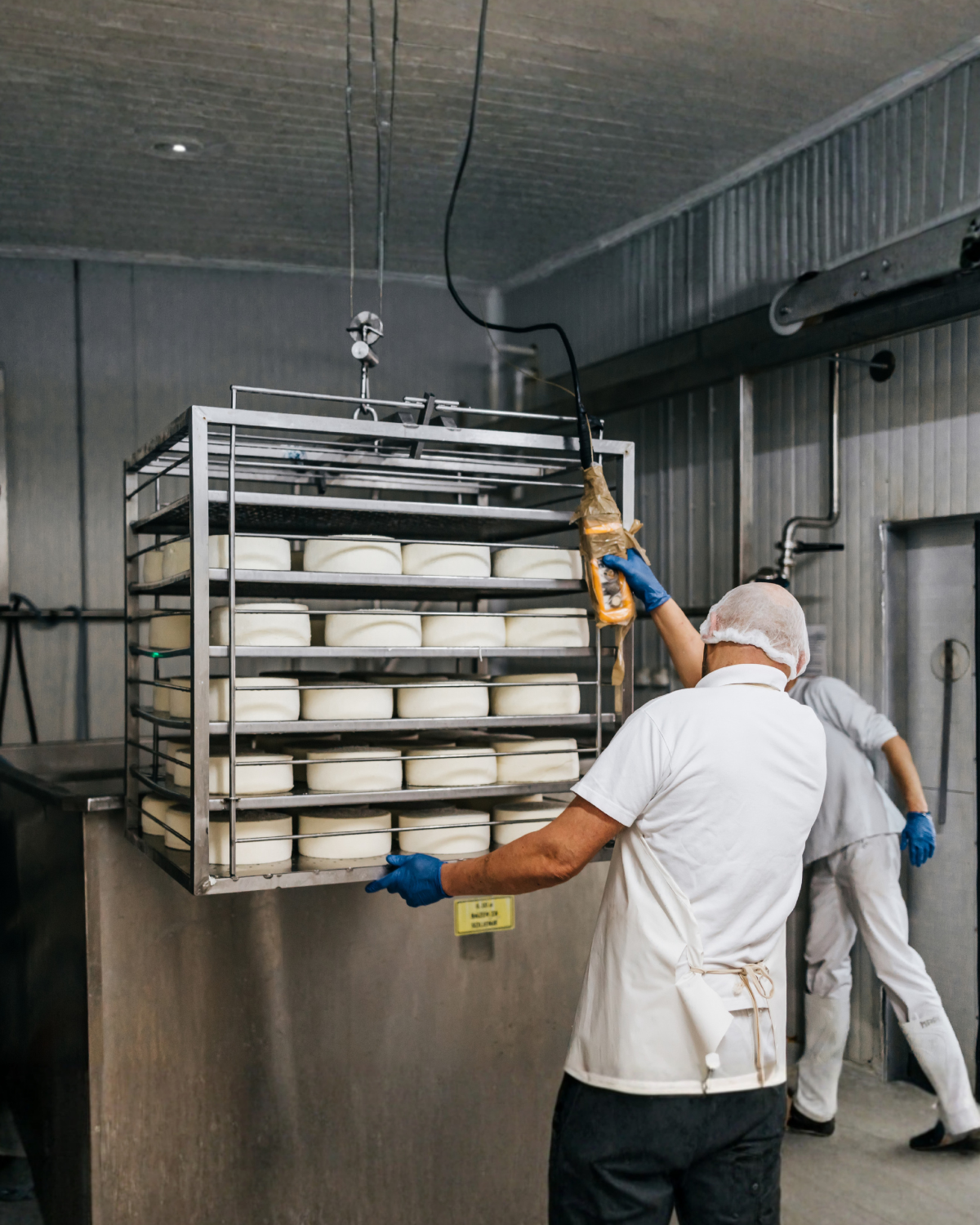
A leading UK cheese manufacturer was introducing new nitrogen pipework into two of its packaging areas, where nitrogen flushing helps extend shelf life by displacing oxygen inside sealed packs. Because nitrogen gives no physical warning before it starves a space of oxygen, the manufacturer wanted a way to detect a leak immediately, particularly once the new pipework had been pressure tested. Shawcity supplied two independent Analox AX60+ fixed oxygen monitoring systems, each wired through relay outputs to automatically close the nitrogen solenoid valves if oxygen levels dropped. The result: a straightforward, cost-conscious system that gives packing-area staff an early warning and cuts the supply at source, without adding complexity to their day.
Customer Background
The customer produces and packages a wide range of branded cheeses for UK retail. Nitrogen flushing is used across much of that packaging process to displace oxygen inside sealed packs, a standard method for preserving quality and extending shelf life. As with most food manufacturers using inert gas in packaging, the process itself is well understood, the question was how to keep the people working around it safe as the pipework changed.
The Challenge
The project centred on new nitrogen pipework being installed into an existing packaging line, including solenoid valves fitted externally on the nitrogen tanks. Nitrogen isn't toxic, but that's part of what makes it dangerous: it's colourless, odourless, and gives no physiological warning as it displaces oxygen in an enclosed space. A leak can lower oxygen concentration to unsafe levels well before anyone notices something is wrong.
Safety of the packing-area workforce was the primary driver behind the project. The manufacturer specifically wanted confidence that any nitrogen loss, particularly following pressure testing of the newly installed pipework, would be picked up quickly. Budget mattered too. This wasn't a facility looking for an elaborate system; they needed something simple to operate and good value, without cutting corners on safety.
Why Oxygen Monitoring Matters
Nitrogen is used across food manufacturing, cheese, meat, snacks, ready meals, fresh produce, wherever a longer shelf life depends on displacing oxygen inside a pack. The packaging process itself tends to get most of the attention. The workplace risk that comes with it can get less.
Because nitrogen doesn't trigger any warning senses before oxygen starts to fall, detecting the gas itself isn't the practical approach. Monitoring oxygen concentration directly is what gives an early, reliable signal that something's wrong, which is why it's become one of the standard methods for protecting people wherever inert gases are handled at scale.
The Solution
After reviewing the site risk assessment, Shawcity specified two independent Analox AX60+ fixed oxygen monitoring systems, one for each packaging area. Each system included:
- Analox AX60+ control panels
- Oxygen sensors
- Splash guards suited to the production environment
- Audible and visual alarm units
- Relay outputs wired to the external nitrogen solenoid valves
If oxygen levels fall below the set alarm threshold, the system does two things at once: it triggers local alarms so anyone nearby knows immediately, and it closes the relevant solenoid valve to stop the nitrogen supply. Detection and isolation happen together, rather than detection simply flagging a problem for someone else to act on.
Running two separate systems, rather than one shared installation, reflected how the facility is actually laid out, each packaging area could be monitored and controlled on its own, without one area's alarm status depending on the other.
Implementation
Because the monitoring installation went in alongside the new nitrogen pipework rather than after it, safety became part of the same project as the process change itself, not a separate job bolted on once the line was already running. That sequencing made for a simpler install and meant the new pipework was never operating without oxygen monitoring in place.
Hygiene requirements shaped the equipment choice too. Everything specified needed to hold up inside a food production environment while still giving operators a genuinely simple interface, a panel someone can glance at and understand, not one that needs a manual.
Lessons for Food Manufacturers
Nitrogen use is close to universal across food packaging, which can make the oxygen depletion risk that comes with it easy to take for granted. Any project introducing new nitrogen pipework, new packaging equipment, or a production line upgrade is a natural point to check whether fixed gas detection has actually been designed in.
Worth reviewing at that stage:
- Where a leak is most likely to occur
- How many people typically occupy the area
- Whether ventilation is adequate for the space
- What the alarm strategy should be
- Whether automatic isolation is realistic to build in
- Who's responsible for ongoing calibration and maintenance
Building these in during planning is almost always simpler than retrofitting them once a line is already back in production.
Conclusion
This project shows what safety integration can look like when it's designed alongside a process change rather than added afterward. By combining oxygen detection with automatic nitrogen isolation, the manufacturer now has a system that protects its people without adding friction to daily operations, proof that food producers don't have to choose between practical, cost-conscious engineering and taking worker safety seriously.
Shawcity works with food manufacturers across the UK and Ireland to design, supply, install, and maintain fixed gas detection systems suited to their specific operations. If you're introducing a new process gas, upgrading a packaging line, or reviewing existing safety measures, get in touch to talk through what monitoring should look like for your site.





 01367 899553
 info@shawcity.co.uk