

Artificial intelligence is changing the way we work, making information more accessible and helping businesses work more efficiently. In technical support, it can help answer routine questions, search documentation and point customers in the right direction.
But what happens when the answer isn't straightforward? When equipment behaves unexpectedly, a reading doesn't look right or a customer's application presents a challenge that doesn't fit the usual guidance?
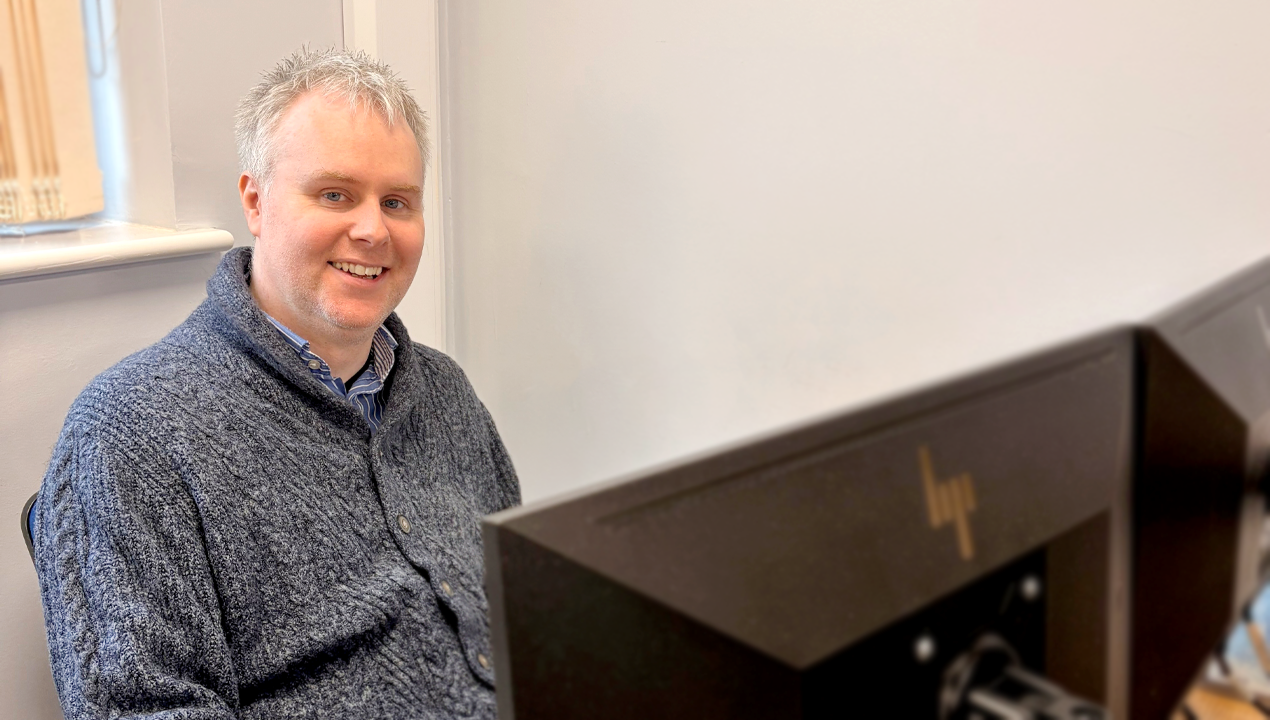
For William Franklin, Technical Support and IT Operations at Shawcity, these are the situations where experience really matters.
Having spent more than 13 years at Shawcity, William has developed extensive knowledge of monitoring technology, working with customers to understand their requirements, troubleshoot equipment and find practical solutions. His experience highlights an important distinction: finding information is one thing; knowing how to apply it in the real world is another.
More than finding the answer
Technical support isn't always about identifying a product or referring someone to a manual. It often starts with understanding what the customer is trying to achieve.
The suitability of monitoring equipment can depend on several factors, including the target substance, working environment, measurement requirements and how the instrument will be used. When something goes wrong, understanding those details can be just as important as knowing the equipment itself.
Over the years, William has encountered a wide range of customer questions and technical challenges. That experience helps him recognise potential issues, identify which details need investigating and ask the right questions before recommending a way forward.
Sometimes, the solution isn't a replacement instrument or a complicated fix. It may simply be a better understanding of how existing equipment can be used more effectively.
This is where practical experience makes a difference. A manual can explain how equipment should work, but understanding why it isn't behaving as expected often requires a closer look at the circumstances surrounding the problem.
William's perspective on AI
AI offers real benefits for technical support, from finding information quickly to helping teams manage routine enquiries. William recognises its potential, but believes it's important to understand its limitations, particularly when dealing with safety-critical applications such as gas detection.
“AI is a powerful tool, but it’s important to understand its limitations. AI can use both probabilistic and deterministic models, and it isn’t always clear which is underpinning a particular answer. Assuming every response is definitive can be dangerous, particularly in safety-critical applications such as gas detection.
Ultimately, AI is an amplification tool. It can enhance what we know, but you need the underlying knowledge and experience to challenge its outputs, distinguish fact from fiction, and understand what is genuinely practical. Something can be technically correct in theory but completely wrong in practice when the wider context is missing. That’s where human judgement and critical thinking remain essential.
We’re social by nature. People want to talk things through with others, test hypothetical scenarios, explore different conditions and contexts, and seek reassurance. AI can support that process, but I don’t believe it will ever replace the value of human interaction entirely. To lose that would be to lose an important part of what makes us human.”
William's point is particularly relevant to technical support. AI can help identify information and suggest possible answers, but those answers still need to be assessed against the actual application. Knowing when something doesn't quite add up, what to question and when further investigation is needed relies on technical understanding and sound judgement.
The value of experience in an AI-driven world
Rather than replacing technical expertise, AI has the potential to help specialists like William work more efficiently. By taking care of routine enquiries and making technical information easier to access, it can leave more time for complex problems and conversations that benefit from a more considered approach.
For customers, that means combining the speed and accessibility of technology with the reassurance of speaking to someone who understands the equipment, the application and the challenges involved.
William's experience at Shawcity demonstrates why that balance matters. More than a decade of working with monitoring technology and supporting customers has built an understanding that goes beyond product specifications. It is knowledge shaped by real situations, practical challenges and the questions that arise along the way.
As AI continues to evolve, that experience will remain valuable. Technology can help us find answers faster, but knowing which answer is right for the situation is another matter entirely.
At Shawcity, we will continue to embrace tools that help us work more effectively, while recognising the people and expertise behind the support we provide.


 01367 899553
 info@shawcity.co.uk