

Construction and demolition sites bring together heavy machinery, vehicle movements, specialist contractors and activities where concentration, coordination and sound judgement are essential.
From operating excavators and mobile plant to working at height or dismantling structures, the consequences of impaired performance can be significant.
Drug and alcohol testing can form part of a wider approach to managing these risks. However, introducing a testing programme requires careful consideration of the methods used, the activities involved and how results will be managed.
For construction companies, demolition contractors and site safety managers, understanding the available technologies is an important starting point.
Why Consider Drug and Alcohol Testing on Construction Sites?
Construction and demolition work involves a combination of physical hazards, changing site conditions and safety-critical activities.
Potentially affected operations include:
- Plant and machinery operation: Excavators, telehandlers, cranes and other mobile equipment require attention and coordination.
- Working at height: Scaffolding, roof work and elevated platforms require appropriate judgement and awareness.
- Demolition activities: Structural dismantling, mechanical demolition and associated operations require careful planning and communication.
- Vehicle movements: Deliveries, site traffic and reversing operations can introduce risks to workers and pedestrians.
- Maintenance and isolation: Servicing machinery and working around hazardous energy sources require consistent adherence to procedures.
Alcohol and certain drugs can affect reaction times, coordination, concentration and decision-making. These effects may increase the risks associated with safety-critical work.
The Health and Safety Executive (HSE) advises employers to consider drug and alcohol misuse within their health and safety arrangements, particularly where impaired performance could have serious consequences.
Testing may support these arrangements where it is justified by the risks and implemented through an appropriate workplace policy.
Is Drug and Alcohol Testing Mandatory in UK Construction?
There is no general legal requirement for every construction or demolition employer to carry out routine drug and alcohol testing.
Under the Health and Safety at Work etc. Act 1974, employers have duties to protect employees and others who may be affected by their activities, so far as is reasonably practicable.
The Management of Health and Safety at Work Regulations 1999 also require employers to assess workplace risks and implement appropriate preventive and protective measures.
Drug and alcohol testing may form part of an organisation's approach to managing those risks, particularly for safety-critical roles.
Individual contractors, principal contractors and site operators may also establish testing requirements through workplace policies or contractual arrangements.
However, a contractual requirement does not remove the need for testing to be lawful, proportionate and appropriately managed.
Employers should establish clear procedures covering the circumstances in which testing may occur, who may be tested and how results will be handled.
How Does Workplace Drug Screening Work?
Drug screening equipment tests a biological sample for specified drugs or drug metabolites.
Different methods are available, including oral-fluid and urine testing. The choice depends on the testing programme's objectives, collection requirements and substances of interest.
Oral-fluid drug testing
Oral-fluid testing uses a saliva sample collected with a swab or similar device.
Portable screening kits can be particularly practical for construction and demolition environments, where testing may need to take place at temporary site offices or across different operational locations.
The Dräger DrugCheck 3000, available from Shawcity, is a portable oral-fluid screening device designed to identify specified drugs or drug groups.
The sample is collected using the device's integrated swab and analysed through a self-contained test cassette.
According to Dräger, results are available in approximately three to five minutes, depending on the procedure, and the device does not require an electrical power supply.
This makes it suitable for consideration where organisations require portable, preliminary drug screening.
The substances detected depend on the test configuration, so employers should check that the selected kit covers their programme's requirements.
Urine drug testing
Urine testing is another established method for workplace drug screening.
It can identify specified substances or metabolites, but detection does not necessarily establish when a drug was taken or whether the individual is currently impaired.
Collection procedures also require suitable privacy, sample integrity controls and arrangements for handling results.
The appropriate method should be selected according to the purpose of testing rather than assuming that one sample type is suitable for every situation.
Understanding Drug Screening Results
A workplace drug screening test provides an initial indication of whether a specified substance or metabolite has been detected above the test's threshold.
A non-negative screening result does not, by itself, establish current impairment or confirm drug misuse.
Where results may have significant employment or safety consequences, employers should have procedures for appropriate confirmatory laboratory testing and review.
These procedures should address sample identification, chain of custody, confidentiality and the potential relevance of prescribed medication.
Similarly, a negative screening result does not guarantee that a worker is fit to carry out a safety-critical activity.
Drug testing should therefore be considered alongside supervision, competency, fitness-for-work procedures and other relevant safety controls.
How Does Workplace Alcohol Testing Work?
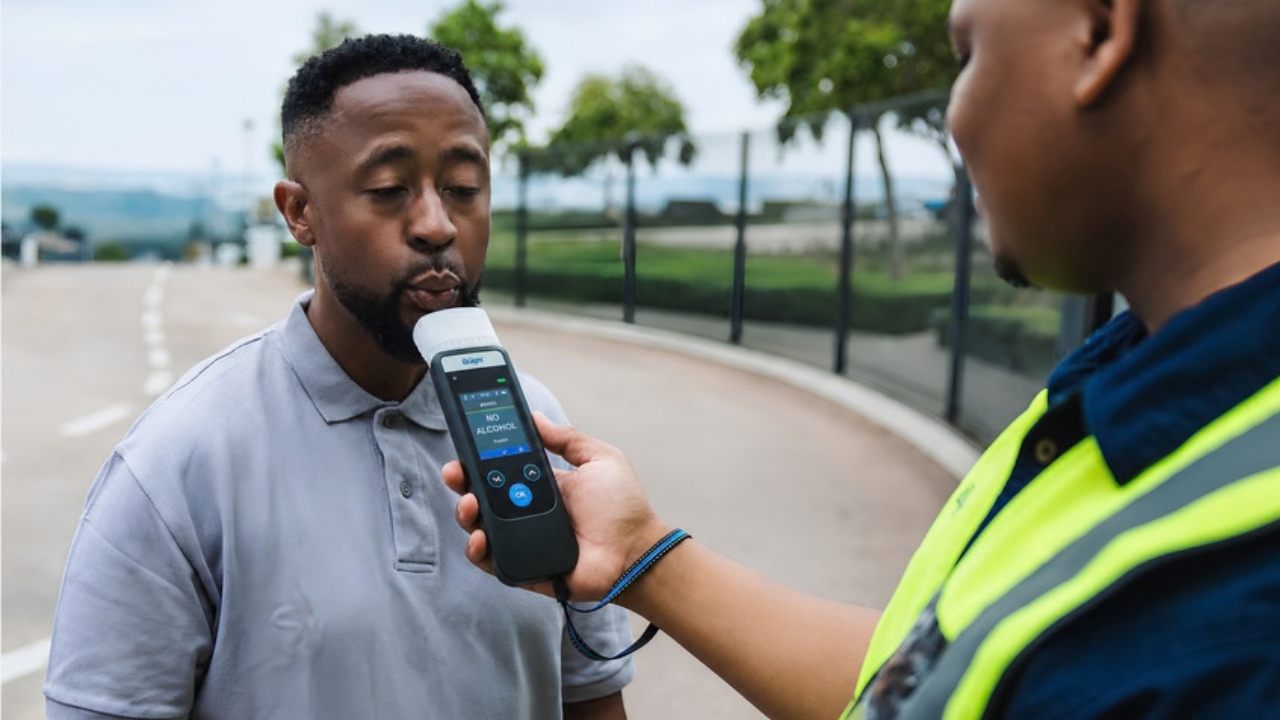
Workplace alcohol testing commonly uses a breathalyser to measure alcohol in exhaled breath.
Professional breathalysers often use electrochemical fuel-cell sensors, which respond to alcohol in a breath sample.
The Dräger Alcotest range, supplied by Shawcity, includes instruments designed for different alcohol screening and measurement requirements.
For example:
- Alcotest 5000: A contact-free alcohol screening device suited to applications requiring preliminary checks without a conventional mouthpiece.
- Alcotest 6000: A portable professional breathalyser using electrochemical sensor technology.
- Alcotest 7000 and 7510: Professional instruments offering additional capabilities for organisations with more extensive testing and documentation requirements.
The choice depends on the testing procedure, required measurement capabilities, operator training and record-keeping arrangements.
Professional alcohol testing equipment also requires appropriate maintenance and calibration or accuracy checks in accordance with manufacturer instructions.
Choosing Testing Equipment for Construction and Demolition
Construction sites present practical challenges that should influence equipment selection.
Testing may take place across several locations, involve different contractors or be carried out by trained personnel who have other site responsibilities.
Important considerations include:
Portability: Equipment may need to be transported between site offices, depots and temporary work locations.
Sample collection: The process should be suitable for the testing environment, with appropriate hygiene and privacy arrangements.
Result interpretation: Operators must understand the device's indicators, limitations and procedures for invalid or non-negative results.
Testing capacity: Organisations should consider the number of workers who may need testing and the time required for each procedure.
Documentation: Record keeping should be consistent with the organisation's policy and data protection requirements.
Ongoing maintenance: Breathalysers may require calibration, servicing and consumables, while disposable drug screening kits need appropriate storage and stock management.
Equipment selection should support the established testing procedure rather than determine the policy itself.
Building a Consistent Site Testing Programme
An effective programme begins with a documented policy that reflects the organisation's activities and risk assessment.
The policy should explain when testing may be undertaken, which roles are covered, how workers will be informed and what procedures apply following a result.
For construction and demolition projects involving multiple contractors, responsibilities also need to be clearly established.
Site managers should understand how the programme applies to subcontractors, visitors and other personnel, where relevant and lawfully justified.
Testing personnel require suitable training in sample collection, equipment operation, hygiene, documentation and result handling.
Employee information must also be managed appropriately. Drug and alcohol test results can involve sensitive health-related personal data, requiring particular care under UK data protection law.
The Information Commissioner's Office (ICO) advises that workplace testing should be necessary and proportionate, with consideration given to the risks associated with particular roles.
Testing programmes should also establish appropriate procedures for workers who may require support for substance-related problems.
Drug and Alcohol Testing Equipment from Shawcity
Shawcity supplies Dräger drug and alcohol testing equipment for organisations operating across construction, demolition and other industrial environments.
The Dräger DrugCheck 3000 provides portable oral-fluid drug screening, while the Alcotest range offers options for professional breath alcohol testing.
Our team can help organisations compare equipment capabilities, sampling methods and practical operating requirements when selecting suitable devices for their testing procedures.
Supporting Safer Construction and Demolition Operations
Drug and alcohol testing can provide useful information within a wider workplace safety programme, particularly where activities involve plant operation, vehicle movements and other safety-critical tasks.
The effectiveness of a programme depends on selecting appropriate methods, applying consistent procedures, interpreting results correctly and managing employee information responsibly.
For construction and demolition employers, these considerations should form part of the wider approach to controlling site risks.
Explore Shawcity's drug and alcohol testing equipment or contact our team to discuss suitable options for your construction or demolition operations.
.png)

 01367 899553
 info@shawcity.co.uk