

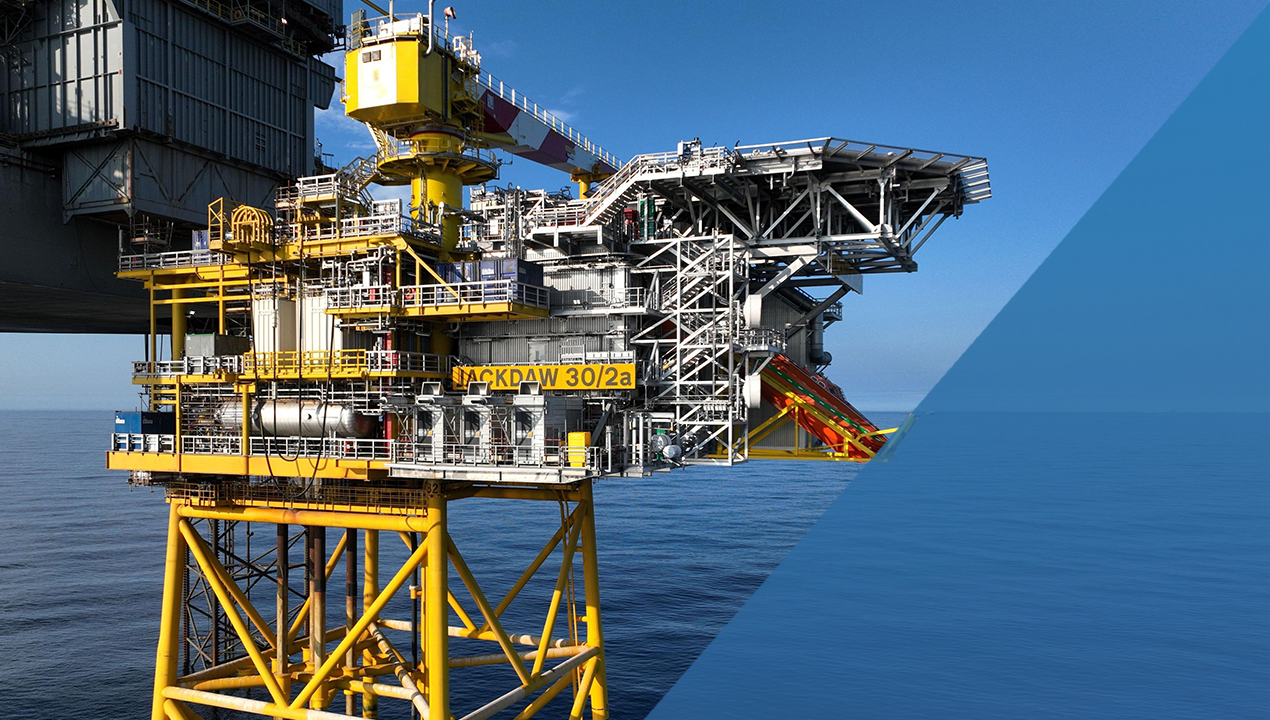
The UK’s North Sea gas industry is back in the spotlight following the Government’s recent decision on the Jackdaw gas field, highlighting the continuing role of domestic gas production in the UK’s energy supply.
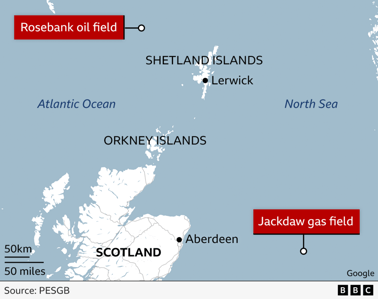
Announced on 21th October 2026, the decision paves the way for gas production at the Jackdaw field, operated by Adura, subject to the relevant consents. The project is expected to increase UK domestic gas production by around 6% at its peak, with production potentially continuing for up to 11 years.
Read the Government’s Jackdaw announcement
As offshore operations continue, maintaining high safety standards remains essential. From detecting hazardous gases and hydrocarbon leaks to ensuring alarms reach the right people quickly, reliable gas detection and monitoring technology plays a vital role in protecting workers in challenging offshore environments.
Commenting on the decision, Energy Secretary Miatta Fahnbulleh recognised the contribution of “the highly skilled and vital North Sea workers”, bringing the people behind the industry into focus.
Protecting these workers requires more than detecting hazards alone. In remote offshore locations, the ability to communicate alarms, monitor conditions and support an effective response can be just as important.
Shawcity supports this through its work with Perenco UK, helping evaluate connected gas detection technology designed to provide remote visibility of alarms and support safer working practices offshore.
Understanding the risks of offshore gas operations
Offshore gas installations present a range of safety challenges. Hydrocarbon leaks can create risks of fire and explosion, while exposure to hazardous gases can threaten workers’ health. Remote locations, harsh weather and limited access to installations can also make it more difficult to respond quickly when an incident occurs.
Gas detection is therefore a critical part of offshore safety management. Fixed systems provide ongoing monitoring in designated areas, while personal gas detectors help protect workers during maintenance and other permitted activities. Additional area monitoring can provide another layer of visibility where work is taking place.
However, detecting a hazard is only part of the picture. Being able to communicate alarms quickly, understand where an incident has occurred and check on workers in isolated locations can also be vital.
Connecting offshore gas detection with real-time monitoring
Traditional gas detection systems remain fundamental to offshore safety, but connected technology can offer additional capabilities by transmitting alarms and status information to teams remotely.
This is particularly relevant on normally unattended installations (NUIs), where personnel may only visit periodically for inspection, maintenance or decommissioning work. Remote monitoring can help provide greater visibility of conditions when workers are on site, without relying solely on someone being physically present to identify an alarm.
Shawcity works with Blackline Safety to provide connected gas detection solutions designed to support these requirements. Depending on the application and available connectivity, systems such as the wearable G8c and portable EXO 8 area monitor can combine gas detection with remote alerts and communications functionality.
The G7c can also support lone-worker monitoring features, including man-down alerts, while the EXO 8 can monitor multiple gases simultaneously. These capabilities can help safety teams access information remotely and respond more effectively when an alarm is raised.
Connectivity is an important consideration offshore, so equipment must be assessed in the context of the installation, network coverage and operational requirements.
CASE STUDY: Supporting Perenco UK’s offshore gas safety trial
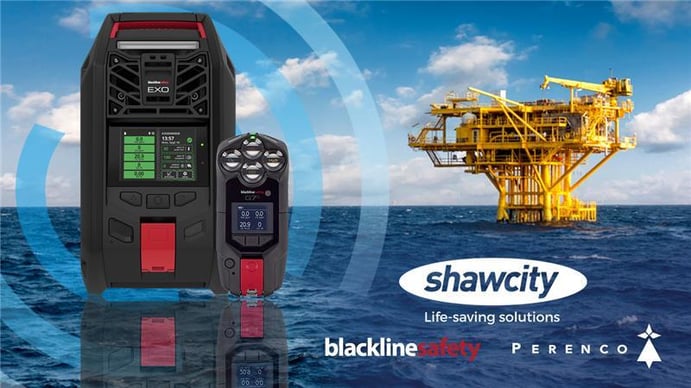
Shawcity’s work with Perenco UK demonstrates how connected gas detection can be evaluated for real offshore applications.
Perenco already uses fixed gas detection across its North Sea infrastructure to monitor methane and other hydrocarbons, alongside personal gas detection for permitted work activities.
Following earlier work deploying Blackline Safety EXO 8 and G8c devices at the Bacton gas terminal, Perenco invited Shawcity to support a trial of the same technology offshore. The objective was to establish whether the devices could communicate successfully using the available 4G network.
The trial demonstrated successful connectivity and remote alarm functionality. The equipment performed as expected, with test emergency alerts received and battery performance also noted as a benefit of the EXO 8.
Ian Sloane, Instrument Engineer at Perenco, highlighted the potential for remote monitoring on normally unattended installations during decommissioning, as well as possible applications on offshore platforms and maintenance vessels.
The findings provided a useful proof of concept for connected gas detection in offshore environments, demonstrating how technology could complement existing safety arrangements where suitable network coverage is available.
Read the Perenco UK case study
Supporting safer offshore operations
The Jackdaw decision brings renewed attention to the UK’s offshore gas industry, but the need to manage operational risks applies across existing and developing projects alike.
Selecting the right monitoring equipment depends on the gases present, the working environment, the tasks being carried out and the level of monitoring required. For offshore operators, it is also important to consider how alarms will be communicated and how workers can be supported when operating in isolated locations.
Shawcity supports businesses with gas detection technology and application advice, helping customers explore solutions suited to their operational requirements.
Through our work with Perenco UK, we have seen how connected monitoring can offer additional opportunities for offshore safety, particularly where remote visibility and worker monitoring are important considerations.
Looking to review your offshore gas detection requirements?
Contact Shawcity to discuss portable and area gas monitoring solutions for your application.
01367 899553
solutions@shawcity.co.uk

 01367 899553
 info@shawcity.co.uk